Nitrobenzene is an aromatic chemical intermediate whose most important industrial destination is aniline, not a finished fertilizer or plant-growth product. By tracing its manufacture, conversion routes, downstream markets, specifications, and handling requirements, you can assess where it belongs in a process and what to verify before buying it.
Key takeaways
- Nitrobenzene primarily serves as an intermediate for producing aniline.
- Aniline leads to MDI, dyes, pharmaceuticals, and rubber chemicals.
- Check purity, water content, acidity, colour, and batch documentation before purchase.
- Keep nitrobenzene away from heat, ignition sources, and incompatible chemicals.
What nitrobenzene is and how industry makes it
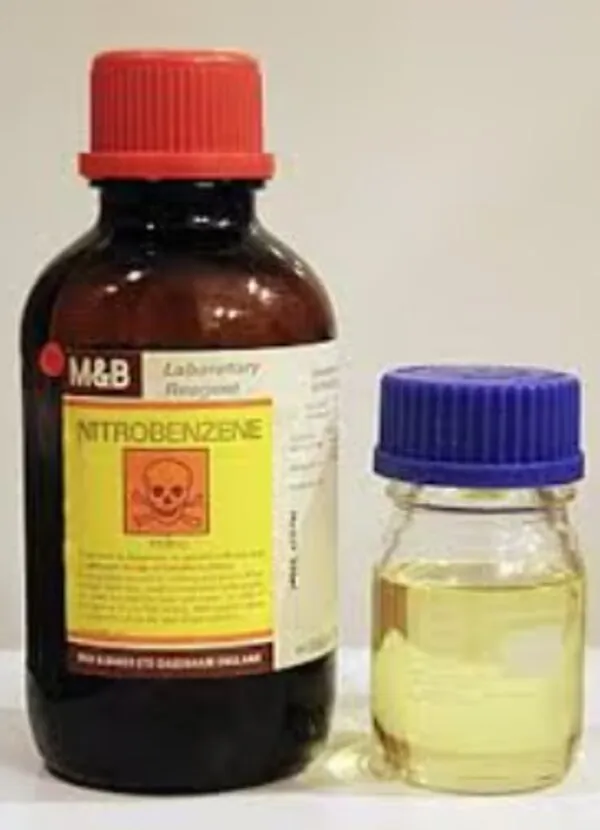
Nitrobenzene is C6H5NO2, a pale yellow oily liquid and an aromatic nitro compound formed when a nitro group replaces one hydrogen on benzene. It is not a fertilizer, plant-growth product, or usual agricultural formulation; its main role is an upstream building block for further chemical conversion.
Industry makes it through controlled benzene nitration. Benzene reacts with nitric acid in a nitric acid and sulfuric acid nitration system; sulfuric acid helps generate the active nitrating species, while temperature, acid strength, mixing, and residence time control the reaction. The target is mononitration, because excessive nitration creates dinitrobenzene and complicates separation.
After reaction, the plant separates the organic nitrobenzene phase from spent acid, washes it, and removes water and unreacted benzene through purification. Residual acidity, water, benzene, and dinitrobenzene are different quality concerns; one low “purity” number does not describe all four.
The purified material enters the chain mainly as feedstock for aniline. A hydrogenation unit reacts nitrobenzene with hydrogen over a catalyst, with heat removal and contaminant control protecting selectivity and catalyst life. Aniline then feeds polyurethane-related MDI production and other chemical manufacturing routes, linking nitrobenzene demand to industrial materials rather than direct farm application.
Why aniline is the main industrial destination
The main industrial destination is aniline: plants use catalytic hydrogenation of nitrobenzene to add hydrogen and remove the nitro group’s oxygen as water. They run the reaction as either vapor-phase hydrogenation or liquid-phase hydrogenation. The choice changes reactor heat management and downstream separation demands.
Aniline reacts with formaldehyde to form methylene diphenyl diamine, commonly called MDA, which is then phosgenated to produce methylene diphenyl diisocyanate, or MDI. MDI is a major polyurethane isocyanate used in products such as foams and rigid insulation. Nitrobenzene sits upstream of MDI; it is not itself an isocyanate feedstock.
Poor hydrogenation selectivity leaves unwanted reduction intermediates:
- Azoxybenzene
- Azobenzene
- Hydrazobenzene
These compounds increase purification work and indicate unsuitable catalyst conditions or inadequate hydrogen availability. The plant must balance high conversion and selectivity against catalyst life. Excess water, acid carryover, sulfur compounds, halides, or trace metals can disrupt that balance, increase corrosion, or raise purification costs.
For this reason, an aniline producer needs nitrobenzene specifications built for hydrogenation feed, not merely material that meets a solvent-grade appearance or assay.
Downstream uses in MDI, dyes, pharmaceuticals, and rubber chemicals
A polyurethane plant depends on aniline made from nitrobenzene before it ever handles MDI. Aniline reacts with formaldehyde to form methylene diphenyl diamine, or MDA; phosgenation then converts MDA into methylene diphenyl diisocyanate MDI. The MDI route supplies the isocyanate component for polyurethane foams, polyurethane coatings, adhesives, elastomers, and insulation.
The same aniline platform feeds several unrelated manufacturing chains:
| Product chain | How aniline is used | Products that depend on the route |
|---|---|---|
| Methylene diphenyl diisocyanate | Converted through MDA into MDI | Rigid and flexible polyurethane foams, coatings, adhesives, elastomers, and insulation |
| Dyes and pigments | Transformed into dye and pigment intermediates | Colorants for textiles, plastics, paints, inks, and coatings |
| Rubber chemicals | Built into accelerators, antidegradants, and related intermediates | Tyres, belts, hoses, seals, and other vulcanised rubber goods |
| Pharmaceuticals | Used as an aromatic starting material or intermediate | Active-ingredient and medicinal-intermediate manufacturing |
| Agricultural chemicals | Incorporated into selected herbicide and pesticide intermediate families | Crop-protection products, not usually nitrobenzene itself |
A failed reduction can disrupt every downstream specification. Azoxybenzene, azobenzene, and hydrazobenzene indicate poor hydrogenation selectivity or unsuitable catalyst conditions, while residual nitrobenzene, water, and catalyst poisons can burden separation and reduce aniline quality. A buyer assessing supply therefore needs more than an assay value: request impurity limits matched to the intended aniline derivative.
Direct solvent use, material specifications, and safe handling
Direct solvent use makes sense in specialty operations that need a high-boiling organic solvent with low volatility at reaction temperatures; it remains secondary to hydrogenation feed use. The nitrobenzene freezing point 5.7 °C means cold tanks and unheated lines can solidify during transfer.
Its nitrobenzene boiling point 210.9 °C supports high-temperature service, but does not remove the need for ventilation and exposure controls.
Specify these operating facts before accepting a shipment:
- Physical: density is about 1.20 g/cm³ at room temperature, while water solubility is about 0.2 g/L. Nitrobenzene forms a separate organic phase in many aqueous systems, but leaks can still contaminate wastewater.
- Purity: request separate results for water, residual acidity, benzene, dinitrobenzene, sulfur compounds, halides, and trace metals. One purity percentage cannot replace these controls.
- Handling: use closed transfer, local exhaust ventilation, compatible gloves and eye protection, spill containment, and a wastewater plan. Shipments identified as UN 1662 nitrobenzene are Class 6.1 toxic substances, generally Packing Group II.
| Service | Solvent use | Hydrogenation feed |
|---|---|---|
| Purpose | Specialty reaction or extraction medium | Conversion to aniline |
| Critical checks | Water, acidity, organic impurities | Catalyst poisons, water, acid carryover, sulfur, halides, metals |
| Operational risk | Leakage, exposure, wastewater contamination | Corrosion, catalyst loss, poor selectivity, higher purification cost |
How to distinguish industrial intermediate grade from agricultural formulations
A manufacturing buyer needs a feedstock specification, not an agricultural formulation label. An agricultural formulation may contain carriers, stabilisers, surfactants, or other ingredients that are irrelevant to plant synthesis and troublesome in hydrogenation. Confirm that the drum is sold as industrial-grade nitrobenzene for your defined process.
1. Request a current certificate of analysis and compare it with your approved nitrobenzene specification. Check assay, appearance, density, and the test methods used rather than accepting “high purity” as a result.
2. Separate residual acidity and water from organic impurities. Ask for measured acidity, water content, benzene, and dinitrobenzene values; one combined purity percentage can hide a water or acidity problem that changes corrosion, phase behaviour, and reaction control.
3. Ask whether the material has been screened for catalyst poisons. Sulfur compounds, halides, trace metals, and other contaminants can reduce hydrogenation activity, shorten catalyst life, or change selectivity even when the headline assay passes.
4. Match the package documents to the process. The SDS should identify nitrobenzene, while the batch record should show manufacturing date, batch number, storage conditions, and retest date. Reject a container with a broken seal or mismatched paperwork.
Shiv Chemicals can be useful to a buyer only when it confirms whether the offered material is an industrial feedstock or an agricultural formulation and supplies process-relevant batch data. Do not infer suitability for aniline manufacture from solvent-grade wording alone.
Related product
 | OTHERS Features Precise composition No side effects Longer shelf life Approved quality Highly effective It is a plant energizer, Flowering stimulants and... View product → |
Frequently asked questions
What is nitrobenzene used for in industry?
Nitrobenzene is primarily used as an intermediate to make aniline, which feeds production of MDI, dyes, pharmaceuticals, and rubber chemicals.
How is nitrobenzene made?
Industry makes nitrobenzene by nitrating benzene with a mixture of nitric acid and sulfuric acid, then separating and purifying the product.
Is nitrobenzene a fertilizer or agricultural formulation?
No. Nitrobenzene is an industrial chemical intermediate, not a fertilizer, plant-growth product, or standard agricultural formulation.
What should buyers check in industrial nitrobenzene?
Check the specification sheet and certificate of analysis for purity, water content, acidity, colour, density, batch number, and storage or transport requirements.