Boric acid is a boron source, glass and ceramic process ingredient, buffer, preservative component, and regulated active substance—but its suitability depends on grade, solubility, dose, and impurity limits. You will be able to match H3BO3 to a process, calculate its elemental-boron contribution, avoid common formulation failures, and request the certificate data needed for a defensible purchase.
Key takeaways
- Boric acid contains approximately 17.5% elemental boron by mass.
- Calculate agricultural applications from elemental boron, not total fertilizer weight.
- Match assay, particle size, moisture, and impurities to the manufacturing process.
- Check the certificate of analysis against CAS 10043-35-3 and your process limits.
What boric acid is—and how it differs from borax and other borates
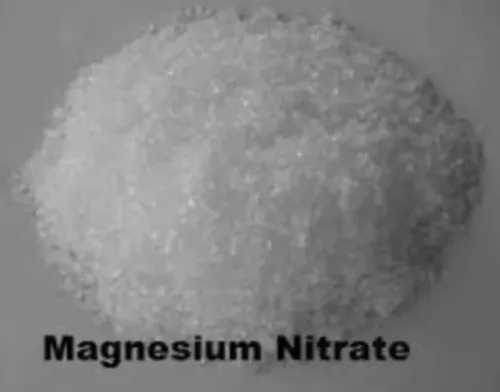
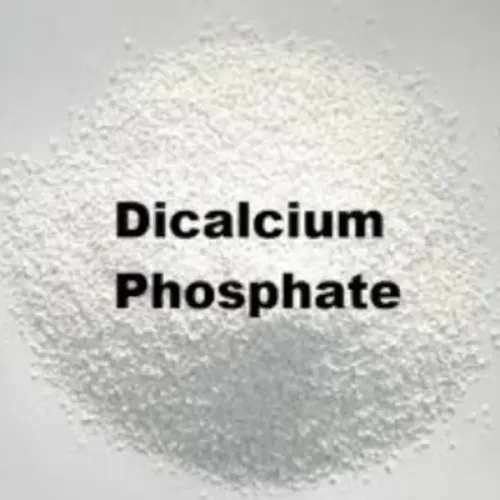
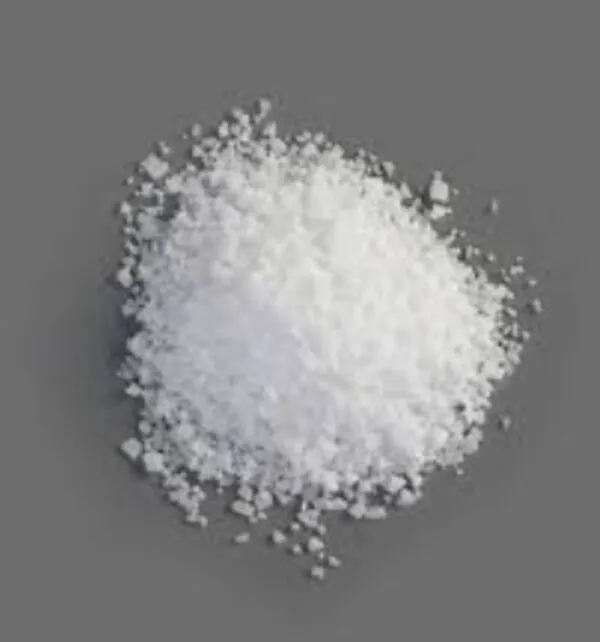
Boric acid H3BO3, CAS 10043-35-3, is a white crystalline solid containing approximately 17.5% elemental boron by mass. One kilogram therefore contains about 175 grams of boron, not one kilogram of fertilizer-grade B. Its behavior depends on assay, crystal or particle size, moisture, insoluble matter, and trace impurities.
Dissolved boric acid is a weak Lewis acid with a pKa near 9.2. Below roughly pH 9, most dissolved boron remains neutral B(OH)3 rather than borate ion. Solubility is about 5.7 g per 100 mL of water at 25 °C, then rises sharply as temperature increases; cold storage can therefore cause crystals in concentrated solutions.
| Material | What it is | Practical distinction |
|---|---|---|
| Boric acid | H3BO3 | Neutral, weakly acidic boron source |
| Borax or sodium tetraborate | Sodium borate salt | More alkaline; a borax versus boric acid comparison must include pH and sodium content |
| Disodium octaborate | Highly soluble borate salt | Concentrated, formulated boron source rather than pure acid |
| Boron oxide | B2O3 | Dehydrated oxide used directly or formed during heating |
| Boron fertilizer | Blended or formulated product | May include carriers, surfactants, or other nutrients |
Technical grade serves industrial processes; agricultural grade requires crop-safe specifications; analytical grade controls assay and trace metals; pharmaceutical grade adds identity, purity, and microbiological documentation; nuclear grade tightly limits impurities and supports reactor chemistry. A product name alone proves none of these, nor does it establish suitability for your particle-size, moisture, assay, or impurity requirements.
How boric acid functions in glass, ceramics, metals, wood, and chemical production
In heated glass batches, boric acid in glass manufacturing becomes boron oxide rather than remaining mainly as H3BO3: 2 H3BO3 → B2O3 + 3 H2O. B2O3 lowers thermal expansion, improves thermal-shock resistance, and strengthens chemical durability in borosilicate, pharmaceutical, laboratory, lighting, and fiberglass glass. Fiberglass boric acid therefore helps control melt chemistry and fibre-forming performance.
Ceramic producers use boric acid as a ceramic glaze flux and to control melting, surface flow, gloss, and glaze fit. Direct addition is not equivalent to a pre-fritted borate: dehydration, volatilization, changing rheology, and firing emissions alter batch composition and reproducibility. Use frits when predictable softening and firing behaviour matter.
Other manufacturing functions include:
- Chemical production: supplies boron for borates, specialty intermediates, and other compounds; it also contributes boron to metallurgy, adhesives, textile treatments, cellulose insulation, and flame-retardant systems.
- Electroplating: boric acid nickel plating buffer in a Watts bath moderates cathode-adjacent pH changes and limits hydroxide-related nickel defects. It does not replace control of nickel chloride, temperature, agitation, current density, or filtration.
- Wood treatment: borates help control decay fungi and insects, but wet or ground-contact wood can lose them through leaching. Specify retention and exposure protection.
- Fire systems: performance depends on loading, substrate, moisture, wash durability, and the test method. Boric acid alone proves no fire rating.
How to use boric acid as an agricultural boron fertilizer without overapplying it
Start with soil tests, plant-tissue tests, crop history, irrigation-water analysis, and visible symptoms—not routine application. A boric acid fertilizer corrects a real problem when these findings indicate boron deficiency and the crop can respond.
Boron deficiency and toxicity sit close together: irrigation water should contain below about 0.5 mg/L for sensitive crops, 0.5–2 mg/L for moderately tolerant crops, and 2–4 mg/L for tolerant crops, subject to crop and site conditions.
One kilogram of boric acid supplies about 175 g elemental B. Use this elemental-boron calculation: boric acid required = target elemental B ÷ 0.175 ÷ product assay fraction. A 99% assay therefore uses 0.99 in the denominator.
Check that the target and result use matching units, then adjust for field area, water volume, and application rate.
| Method | Best use | Main limitation |
|---|---|---|
| Soil or root-zone placement | Supplies roots, meristems, and fruit | Uneven spreading can create toxic patches |
| Fertigation | Distributes a measured dose through irrigation | Poor calibration can overload wet zones |
| Foliar spraying | Protects treated leaves and reproductive tissue | Does not reliably correct root-zone deficiency |
For foliar versus soil boron application, remember that boron is poorly mobile in many crops; polyol-transporting species are an important exception. Dissolve boric acid in warm water, dilute fully, keep the tank agitated, and run a jar test before mixing.
Apply a uniform, low rate, and avoid untested alkaline blends because pH changes boron form and compatibility.
Where specialty-grade boric acid fits—and where technical grade fails
Specialty-grade boric acid is necessary when impurities, biological status, performance, or regulatory evidence affects the finished product. A boric acid insecticide relies on ingestion or abrasive, desiccating contact and delayed mortality; excess repellent additives, uncontrolled wetting, or indiscriminate surface treatment can reduce bait consumption and control.
| Application | Tighter control required | Why technical grade fails |
|---|---|---|
| Baits and dusts | Particle behavior, formulation consistency, low repellency | Poor feeding or uneven contact reduces mortality |
| Laboratory solutions | pH, concentration, trace metals, solution clarity | Contamination shifts test results or obscures observations |
| Pharmaceutical and personal-care products | Identity, assay, microbiological status, residual metals, regulatory documents | An industrial assay does not prove formulation suitability |
| Reactor coolant chemistry | Nuclear-grade boric acid chemical shim, impurity limits, concentration and compatibility control | Trace contaminants can affect corrosion, reactivity control, or plant chemistry |
A boric acid laboratory buffer needs measured pH and concentration, not a product name alone. Preservation systems also require compatibility testing with the preservative package and container materials. In EU supply, boric acid carries the harmonized CLP classification reproductive toxicant Category 1B, H360FD; label the material, control exposure, and check downstream-use restrictions before dispatch.
For water treatment, neutral boric acid passes through normal coagulation because it remains poorly captured. Reverse osmosis performs better after pH elevation converts more boron to borate, but alkaline operation adds scaling risk and later pH-correction work. Use technical grade only when its impurity profile, documentation, and intended process explicitly permit it.
How to select a boric acid grade and verify a supplier’s certificate of analysis
Approve boric acid only after matching the grade to the required elemental-boron concentration, solubility at storage and process temperatures, particle-size distribution, moisture or loss on drying, assay, and impurity limits. At 25 °C, solubility is about 5.7 g/100 mL water, so concentrated liquids can crystallize in cold storage.
Request a boric acid certificate of analysis for the exact lot. Check that it states:
- Product identity, H3BO3, CAS 10043-35-3, grade designation, assay method and result, and elemental-boron value where claimed
- Lot or batch number, manufacture or retest date, moisture or loss on drying, particle-size distribution, and insoluble matter
- Chloride, sulfate, iron, heavy metals, and process-specific limits such as sodium, calcium, or trace metals
- Packaging type and seal, storage temperature, SDS, transport classification, and traceability to the manufacturer
A sound boric acid supplier selection also compares alternatives before approval:
| Option | Solubility and boron | pH, handling, compatibility |
|---|---|---|
| Boric acid | Moderate cold-water solubility; about 17.5% B | Weak-acid behavior; precise industrial and foliar use |
| Borax or sodium tetraborate | More alkaline borate; lower B than boric acid | Raises pH; useful where alkalinity fits |
| Disodium octaborate | Highly soluble; high B | Concentrated fertilizer and wood-treatment formulations |
| Boron oxide | High B; reacts with water | Dust and heat handling; glass and ceramic processes |
| Zinc or other micronutrients | Supplies different nutrients | Not a substitute in boric acid versus boron fertilizer decisions |
Shiv Chemicals is useful when it matches documentation and grade to your plant, farm, or formulation instead of quoting a product name alone. Verify the boric acid assay and impurity profile against your process before release.
Related product
 | OTHERS We supply a wide range of Barium Carbonate which is appreciated for purity and accurate composition and act as analytical reagent. View product → |
Frequently asked questions
How does boric acid differ from borax and other borates?
Boric acid is H3BO3, while borax is a sodium borate decahydrate. They differ in chemical composition, solubility, alkalinity, handling, and process behavior.
How much elemental boron does boric acid contain?
Boric acid contains approximately 17.5% elemental boron by mass, so 1 kilogram supplies about 175 grams of boron.
How should you use boric acid as an agricultural boron fertilizer?
Calculate the required elemental boron dose, account for existing soil boron, dissolve and apply it evenly, and avoid exceeding the crop and soil test recommendation.
When is specialty-grade boric acid necessary?
Use specialty grade when trace metals, insoluble matter, moisture, particle size, or assay limits affect the application or finished product. Technical grade fails when it does not meet those limits.
What should a boric acid certificate of analysis include?
Check the product name, CAS 10043-35-3, assay, elemental boron, moisture, insoluble matter, particle size, trace impurities, batch number, test methods, manufacturing date, and specification limits.