Bleaching powder is not dosed safely by counting scoops: available-chlorine strength, chlorine demand, pH, contact time, and residual testing determine whether disinfection succeeds. By the end, you will be able to plan a controlled treatment sequence, check the result at the point of use, and identify when bleaching powder suits water, sanitation, wastewater, textile, agricultural, or food-handling operations.
Key takeaways
- Calculate dose from chlorine demand, target residual, and available chlorine strength.
- Dissolve powder in clean water and store the solution in a cool, covered container.
- Test free chlorine at the point of use instead of trusting the calculated dose.
- Check organic matter, ammonia, iron, manganese, and sulfides before changing dose.
How to Calculate a Bleaching-Powder Dose from Available Chlorine
Use the measured chlorine demand and required residual to set the chlorine dose, then convert that dose using the product’s available chlorine strength. A fixed scoop fails when organic matter, sulfide, iron, manganese, nitrite, ammonia, or reducing chemicals consume more chlorine than usual.
1. Measure the water volume in cubic metres. For a tank, multiply length × width × average depth in metres. Record 1 m³ as 1,000 litres.
2. Determine chlorine demand with a jar test or field demand test. Add known chlorine doses to representative water, allow the intended contact time, and measure free-chlorine residual. The lowest dose that leaves your target residual gives the chlorine demand plus residual requirement.
3. Calculate the required chlorine dose: chlorine demand + target free-chlorine residual. If demand is 3.2 mg/L and the target residual is 0.5 mg/L, the dose is 3.7 mg/L.
4. Convert the dose into bleaching-powder dosage using this formula:
Product required (kg) = water volume (m³) × chlorine dose (mg/L) ÷ [1,000 × available chlorine fraction]
For 100 m³, a 3.7 mg/L dose, and powder assayed at 30% available chlorine: 100 × 3.7 ÷ (1,000 × 0.30) = 1.23 kg.
5. Prepare and meter that quantity, then verify free chlorine at the outlet or point of use with a DPD test after contact time. Recalculate when water quality or the powder assay changes; ammonia can consume free chlorine and form slower-acting chloramines.
How to Prepare, Apply, and Store a Bleaching-Powder Solution
A weighed scoop is not a controlled dose: bleaching powder contains insoluble salts and variable available chlorine. Prepare a measured stock solution or slurry, keep residue out of the dosing pump, and verify the result at the point of use.
1. Calculate the required powder from the product’s available-chlorine assay and the water volume. Do not assume that a product labelled 30–35% available chlorine behaves like 65–70% calcium hypochlorite.
2. Fill a clean, covered mixing tank with water, then add the weighed powder slowly while agitating. A slurry is safer than assuming complete dissolution; allow heavy residue to settle and draw the usable bleaching-powder solution through a coarse screen or strainer.
3. Meter the stock solution with a calibrated pump or measured dosing line at a point with vigorous mixing. Record the tank volume, powder mass, assay, solution volume and dosing rate so you can reproduce the dose.
4. Apply validated contact time calculations using flow, tank volume, mixing pattern, temperature and pH. For drinking water, a common operating target is at least 0.5 mg/L free chlorine after 30 minutes at pH below 8, with at least 0.2 mg/L at delivery; follow your national standard.
5. Clean the tank, screen and pump before residue blocks the line. Store unused powder sealed, dry, cool and ventilated, away from acids, ammonia, ammonium salts, reducing agents, oils, organics and combustible packaging. Never mix it with another chemical.
How Water Quality Changes Disinfection Performance
pH changes which chlorine species does the disinfecting. Hypochlorous acid is more powerful than the hypochlorite ion; as pH rises, more chlorine becomes hypochlorite ion. At about pH 7.5, the forms are roughly equal, so the same free-chlorine residual disinfects faster at lower pH.
Set the treatment target against these water conditions:
- Turbidity: Filter before chlorination whenever possible. Suspended particles shield microorganisms, so turbid water treatment needs better clarification, longer contact, or a higher verified residual.
- Temperature: Cold water slows disinfection. Extend contact time or verify that the residual delivers the required inactivation.
- Organic matter: Natural organic matter consumes chlorine and can form trihalomethanes and haloacetic acids. Improve filtration and control the chlorine dose rather than simply adding more.
- Ammonia: Ammonia reacts with hypochlorous acid to form chloramines. Choose breakpoint chlorination, ammonia removal, or a designed chloramination process; an uncontrolled dose gives slow disinfection.
- Other chlorine demand: Sulfide, iron, manganese, nitrite, and reducing chemicals consume chlorine before residual appears. Repeat demand testing when raw-water quality changes.
A drinking-water plant usually targets a verified free-chlorine residual after filtration and contact. A wastewater facility applies chlorine after biological treatment and clarification; untreated sewage can consume the dose rapidly. If discharge is chlorine-sensitive, dechlorinate with sulfur dioxide, sodium bisulfite, sodium metabisulfite, or activated carbon. Never mix bleaching powder with acids or ammonia cleaners.
How to Confirm Free-Chlorine Residual at the Point of Use
Test at the outlet, not only in the dosing tank. A healthy upstream reading can hide chlorine loss in a pipe, storage vessel, filter, soil contact zone or wash-water loop.
1. Allow the designed contact period to elapse before sampling. For drinking water, a commonly used WHO operating target is at least 0.5 mg/L free residual chlorine after 30 minutes at pH below 8, with at least 0.2 mg/L remaining at the delivery point. Confirm the applicable national standard before adopting these values.
2. Collect a representative sample from the outlet or point of use in a clean sample cell. Let the water flow long enough to clear stagnant water, then fill the cell without splashing. Test immediately; sunlight, warmth and delay reduce the measured chlorine.
3. Use a DPD colorimetric kit rated for free chlorine. Add the specified DPD reagent, mix, and compare the developed colour with the chart or read it in the photometer. Record free residual chlorine in mg/L as Cl2, along with the time, location and pH.
4. Compare the result with your operating target. A low reading means chlorine demand, poor mixing, excessive flow, short-circuiting or biofilm has consumed the disinfectant; do not correct it with a fixed scoop.
The CT value is disinfectant concentration multiplied by effective contact time. Calculate it using baffling, hydraulic correction and actual flow, because nominal tank detention time overstates exposure. A residual test confirms what reaches use; it does not replace CT validation.
Where Bleaching Powder Fits in Industrial and Agricultural Operations
Choose bleaching powder where an oxidizing disinfectant or bleaching step can be measured and controlled; reject it when chlorine demand, material compatibility, or by-products cannot be managed.
| Application | Benefit | Main limit |
|---|---|---|
| Wastewater disinfection | Controls microbes after solids removal | Organic matter, sulfide, ammonia, and poor mixing consume chlorine |
| Textile bleaching | Lightens suitable fibres before dyeing | Excess exposure weakens fibres and damages shade quality |
| Pulp bleaching | Brightens pulp during a controlled chemical stage | Chlorinated by-products and residual chlorine restrict some mills |
| Agricultural water sanitation | Treats irrigation, produce-wash, and recirculated water | Soil, plant debris, and biofilm rapidly reduce residual |
In wastewater, apply it after screening and clarification where possible. Turbidity shields microorganisms, while natural organic matter increases chlorine demand and can form trihalomethanes and haloacetic acids.
For agricultural water sanitation, judge performance by free chlorine and pH at the outlet or wash point, not by the upstream scoop. Ammonia converts hypochlorous acid into slower-acting chloramines, so breakpoint chlorination or ammonia control may be needed.
Check tanks, pumps, seals, and pipework for chlorine compatibility; the solution is corrosive to unsuitable metals and elastomers. Never share a vessel or transfer line with acids, ammonia cleaners, or other disinfectants, because hazardous chlorine gas or chloramines can form.
Sodium hypochlorite suits dust-free, automated liquid dosing, while bleaching powder suits sites equipped to dissolve solids safely. Ask Shiv Chemicals for the available-chlorine assay, batch number, safety data sheet, packaging date, and storage limits before comparing suppliers.
Related products
 | TEXTILE CHEMICALS Industrial bleaching powder, primarily composed of calcium hypochlorite [(text{Ca(OCl)}_{2})], is a critical chemical agent valued for its potent... View product → |
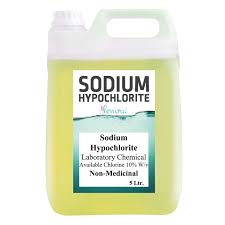 | TEXTILE CHEMICALS We are well known enterprise engaged in providing high in demand Sodium Hypochlorites. View product → |
Frequently asked questions
How do you calculate a bleaching-powder dose from available chlorine?
Calculate the required chlorine mass from water volume, chlorine demand, and target residual, then divide by the product’s available-chlorine fraction.
How should you prepare and store a bleaching-powder solution?
Mix the measured powder with clean water, allow insoluble material to settle, use the clear solution, and keep it covered in a cool, labeled container.
Which water-quality factors reduce bleaching-powder disinfection performance?
Organic matter, sulfide, iron, manganese, nitrite, ammonia, and other reducing chemicals consume chlorine and increase the dose needed for the target residual.
How do you confirm free-chlorine residual at the point of use?
Collect a representative sample at the outlet or use point and test it immediately with a DPD color comparator or photometer.