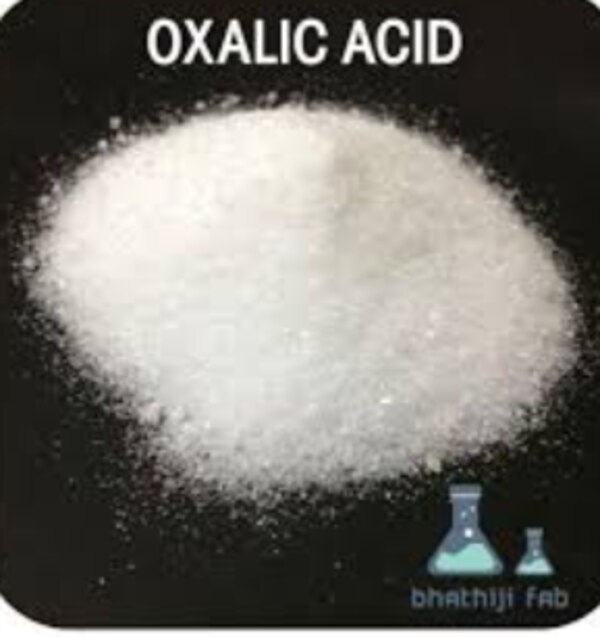
Oxalic acid removes rust and iron staining by combining acidity with oxalate complexation, but the same chemistry can attack a metal surface, create calcium oxalate deposits, or mobilize dissolved metals. By the end, you will know how to choose the chemistry, calculate a working bath, control the cleaning cycle, and decide when another cleaner or treatment is safer.
Key takeaways
- Oxalic acid dissolves iron oxides while chelating released iron.
- Test bath strength and contact time on a representative metal sample.
- Rinse thoroughly and neutralize acidic wastewater before disposal.
- Avoid oxalic acid on incompatible metals or heavy scale requiring stronger acids.
How oxalic acid removes deposits without sacrificing the metal surface
Oxalic acid rust removal works by dissolving iron oxides and iron hydroxide deposits, then binding the released iron as soluble oxalate complexes. This combination of acidity and chelation lifts contamination more selectively than hydrochloric acid, but it does not make the bath non-corrosive.
Oxalic acid for steel and stainless steel cleaning suits iron staining on carbon steel, stainless steel, heat-exchanger parts, boilers, and mineral-processing equipment. It is a poor first choice for deposits dominated by calcium carbonate, silica, or sulfate scale, and it cannot replace a passivation treatment specified under ASTM A967/A967M.
| Contaminant or substrate | Expected response | Main concern |
|---|---|---|
| Iron oxide and rust | Dissolves readily when oxalate keeps iron in solution | Re-deposition if rinsing is poor |
| Iron hydroxide deposits | Respond well to acidic dissolution and complexation | Thick deposits consume bath capacity |
| Carbon steel | Usually tolerates controlled exposure | Excess time, heat, or concentration causes metal loss |
| Stainless steel | Removes external iron contamination | Does not prove passivation or restore damaged steel |
| Copper, brass, aluminium, and galvanized steel | Response varies with alloy and coating | Oxalic acid can dissolve or roughen the substrate |
Call removal selective when the deposit disappears without measurable base-metal loss. Confirm that result with before-and-after weight or dimensional checks, surface-roughness readings, and residual-oxalate testing in the final rinse.
- Stop the treatment if bubbling, dark etching, pitting, or a roughened feel appears on exposed metal.
- Compare an untreated coupon with a cleaned coupon from the same alloy.
- Treat exposed zinc, aluminium, copper alloys, and brazed joints as higher-risk areas requiring qualification.
A practical oxalic acid cleaning and descaling workflow
Start with a small test coupon: a 2–5% w/v oxalic acid cleaning solution at 40–60°C is a practical starting point for iron staining and light scale. Increase strength or heat only after confirming that the base metal remains bright and dimensionally unchanged.
1. Remove oil, loose rust, paint flakes, and grit with a compatible alkaline cleaner or brush. Rinse thoroughly; trapped grease prevents the acid from reaching the deposit.
2. Prepare the bath with water first, then add oxalic acid slowly while stirring. Use a plastic, glass, or compatible lined vessel, and keep hypochlorites, chlorine-releasing oxidants, reactive metals, and catalysts out of the circuit.
3. Immerse the workpiece or circulate the solution across the surface. Record the oxalic acid contact time and temperature; begin with 10–30 minutes at 40–60°C, using agitation to prevent stagnant patches. Stop when the deposit lifts, because longer exposure can attack the substrate.
4. Inspect during the metal descaling workflow. A white or gritty residue can indicate calcium oxalate, especially in hard-water systems; drain and remake the bath instead of extending the treatment.
5. Carry out the oxalic acid rinse and neutralisation immediately: rinse with copious clean water, collect the spent liquor, then neutralise the collected waste under controlled conditions with sodium carbonate or sodium hydroxide. Neutralisation alone does not remove dissolved iron or other metals; test and treat the liquor before discharge.
6. Rinse until the surface water approaches neutral pH, then dry promptly with clean air or a lint-free cloth. Apply the specified corrosion protection before fingerprints or flash rust return.
Oxalic acid in metal treatment and industrial processing
Use oxalic acid metal treatment when iron oxide or iron staining is the target: it complexes dissolved iron after attacking the oxide. That makes it useful for rust removal before painting and rust removal before plating, but excessive concentration, heat, or contact time can etch the substrate rather than clean it.
1. Clean steel, heat-exchanger parts, boilers, and mineral-processing equipment when iron deposits dominate. Rinse thoroughly afterward; residual oxalate or dissolved iron can interfere with coating adhesion. Do not select it as the primary answer to calcium-carbonate, silica, or sulfate scale.
2. Use oxalic acid stainless steel brightening as a specialized step for iron staining and surface discoloration. It does not equal passivation: ASTM A967/A967M lists nitric-acid, citric-acid, and electrochemical treatments, not oxalic acid. Confirm any finishing claim with the required corrosion test.
3. In pulp, paper, and textile lines, remove iron stains and control transition metals that accelerate peroxide decomposition. Oxalic acid is neither a peroxide bleach nor a reducing bleach.
4. In niobium- and tantalum-bearing liquors, oxalate complexes can support specialty-metal separation and purification. Fluoride, sulfate, acidity, and impurity levels determine selectivity, so do not transfer a cleaning-bath recipe to a flowsheet.
Treat spent liquor as metal-bearing waste. Neutralisation alone may leave dissolved, complexed metals; test pH, oxalate, and metal concentrations before discharge or downstream treatment.
Choosing the right oxalic acid form, grade, and working-bath strength
Choose the hydrate state before you compare prices. Anhydrous oxalic acid versus dihydrate is not a like-for-like mass comparison: molecular weights are about 90.03 and 126.07 g/mol, so 1 kg of dihydrate supplies only about 71.4% of the moles in 1 kg of anhydrous material.
| Decision | What changes | Purchasing or dosing effect |
|---|---|---|
| Anhydrous or dihydrate | Active-acid moles per kilogram | Identify the hydrate on the specification and use it in the oxalic acid solution calculation |
| Technical grade oxalic acid or higher purity | Iron, chloride, sulfate, and insoluble contamination | Use technical grade for ordinary iron descaling; choose tighter limits for brightening, textile processing, or sensitive process liquors |
| Fine or coarse crystals | Dissolution speed and dust generation | Fine crystals dissolve faster but create more dust; coarse crystals suit controlled charging with adequate agitation |
| New or reused bath | Acidity, dissolved iron, and contaminant load | Reuse only after testing; a bath that still tests acidic can clean poorly once oxalate or metal contamination is high |
Calculate product mass from actual working volume, not tank capacity: target moles per litre × litres × stated molecular weight, divided by assay fraction. Ask Shiv Chemicals for the certificate of analysis showing hydrate state, oxalic acid assay and heavy metal limits, plus iron and insoluble-matter results.
For a reused bath, measure titratable acidity and dissolved iron before adding concentrate. Record drag-in, evaporation, and sludge; blind top-ups can produce an over-acidic bath that attacks the substrate while leaving deposits behind.
Related product
 | TEXTILE CHEMICALS Among our extensive range of chemicals, Oxalic Acid is the chemical most commonly used in pharmaceutical and textile industries. View product → |
Safety, compatibility, wastewater, and cases where oxalic acid is the wrong choice
Treat oxalate toxicity as a real systemic hazard: absorbed or ingested oxalic acid binds calcium and can cause calcium oxalate deposition and kidney injury. Use oxalic acid PPE and ventilation: chemical-resistant gloves, goggles plus face shield, protective clothing, local exhaust, and closed transfer for powders or concentrated solutions.
Oxalic acid must not be mixed with bleach. Acidifying hypochlorite can release chlorine gas. Segregate the bath from chlorine-releasing oxidants, strong oxidizers, reactive metals, and incompatible catalysts; provide secondary containment and an eyewash and safety shower.
Oxalic acid wastewater treatment starts with segregation. Keep spent liquor away from hypochlorite waste, test pH, oxalate, metals, and fluoride where relevant, then use a controlled calcium-based precipitation step to form calcium oxalate before solid-liquid separation. Confirm discharge limits with laboratory analysis; calcium-containing spill materials reduce dissolved oxalate but do not make exposure safe.
Choose another chemistry when the deposit, substrate, or process demands it:
| Option | Choose it when | Why oxalic acid is the wrong choice |
|---|---|---|
| Citric acid | Stainless-steel passivation or milder chelation is required | Oxalic acid is not an ASTM A967/A967M passivation family |
| Phosphoric acid | You need phosphate conversion or rust-conversion treatment | Oxalate does not provide the same phosphate film |
| Hydrochloric acid | Fast removal of heavy carbonate scale is essential | Oxalate can create insoluble calcium oxalate |
| Sulphamic acid | A controlled descaler with lower fuming is preferred | Oxalic acid adds oxalate handling and disposal |
| Alkaline cleaner | Oils, grease, and protein soils dominate | An acid will not remove them efficiently |
Frequently asked questions
How does oxalic acid remove rust without sacrificing the metal surface?
It dissolves iron oxides and iron hydroxides while binding released iron as soluble oxalate complexes. The bath is selective but remains acidic and corrosive.
What is a practical oxalic acid cleaning and descaling workflow?
Pre-clean the part, prepare a measured bath, test concentration and contact time on a small area, monitor the surface, rinse thoroughly, and neutralize wastewater.
How is oxalic acid used in metal treatment and industrial processing?
It removes rust, iron stains, and mineral deposits during metal cleaning and supports controlled processing where chelation helps keep dissolved iron in solution.
How should you choose oxalic acid form, grade, and working-bath strength?
Select the dihydrate or anhydrous form according to the supplier’s assay and dosing information, then choose a grade and bath strength suited to the metal, deposit, temperature, and process controls.
When is oxalic acid the wrong choice for cleaning metal?
Choose another method when the metal is incompatible, the deposit needs aggressive mineral-acid action, wastewater controls cannot manage oxalate, or testing shows unacceptable surface attack.