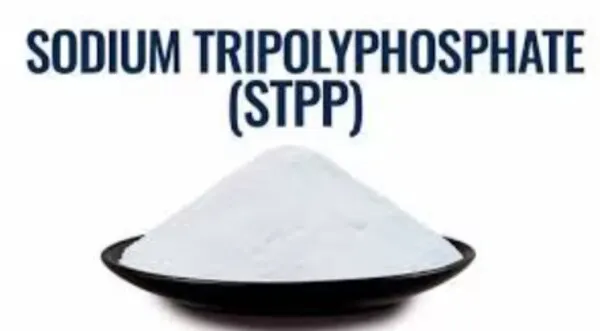
Sodium tripolyphosphate, or STPP, is not simply a water softener or detergent ingredient: its phosphate chain can bind hardness ions, buffer alkalinity, disperse solids, and alter slurry rheology. By the end, you will be able to match those functions to ceramic, detergent, water-treatment, food-processing, and mineral-slurry applications, then compare grades, dosage methods, storage controls, and alternatives.
Key takeaways
- STPP provides soluble alkalinity, phosphate activity, and particle-dispersion benefits.
- Control STPP dosage and slurry viscosity during ceramic spray drying.
- Compare detergent-grade STPP with zeolites, citrate, and carbonate alternatives.
- Approve supplies using identity, purity, moisture, particle-size, and batch-document checks.
What STPP Does Chemically in Industrial Formulations
Sodium tripolyphosphate is a multifunctional sodium phosphate, not merely a source of phosphorus. Its chemical identity is pentasodium triphosphate, or STPP, with the formula Na₅P₃O₁₀ and CAS 7758-29-4. In water, it dissolves and gradually hydrolyses into shorter phosphate species, giving formulators soluble alkalinity and phosphate activity.
Its main functions are:
- It binds calcium and magnesium, reducing hardness that would otherwise consume surfactants or destabilize slurries.
- It buffers alkaline formulations, helping maintain pH as soils, fillers, or acidic contaminants enter the process.
- It adsorbs onto pigment, mineral, and inorganic particles, creating electrostatic repulsion that supports dispersion and particle deflocculation.
- It helps suspend loosened soil and solids, reducing agglomeration and redeposition.
- It improves wetting and dissolution by controlling the interactions between water, dissolved ions, and particle surfaces.
| Function | Chemical action | Process benefit |
|---|---|---|
| Water softening | Complexes calcium and magnesium | More effective surfactants and fewer mineral deposits |
| Buffering | Supplies alkaline phosphate species | More stable formulation pH |
| Dispersion | Adsorbs on particle surfaces | Lower flocculation and more uniform slurries |
| Builder action | Combines hardness control with alkalinity | Stronger detergent performance |
Performance depends on hydration rate, particle size, and the balance of crystalline phase I and phase II. Hard process water, high ionic strength, or calcium-containing fillers can defeat a dosage that works in deionized water.
STPP is a soluble phosphate, but its sodium load and rapid hydrolysis make it a formulation-specific ingredient rather than a direct replacement for agricultural fertilizer phosphate.
STPP in Ceramic Bodies, Tile Slips, Glazes, and Spray Drying
Add STPP as a dissolved solution, not as a dry pile dropped onto ceramic powder. Pre-wet the clay and mineral mix with most of the process water, start agitation, then introduce the STPP solution gradually; this gives each particle access to the deflocculant and prevents local overdosing.
- Prepare a 5–10% STPP solution in clean process water.
- Add it after the raw materials are wetted, in several increments, while mixing.
- Measure viscosity, density, flow time, and residue after each increment.
- Build a dosage curve against dry solids, using screening points such as 0.1%, 0.2%, 0.3%, and 0.4% STPP by dry weight.
- Stop at the lowest dosage that reaches the target viscosity and casting or pumping behavior.
The working point produces a fluid slurry at the required solids loading without rapid settling, foaming, excessive sediment, or a large viscosity change after resting. Check the slurry again after a defined holding period; a mixture that flows well immediately but thickens later is not stable.
Excess STPP causes excessive deflocculation, delayed setting, weak green strength, and unstable rheology. In ceramic bodies and tile slips, that can slow casting or leave fragile unfired ware. Glazes need the same control because over-dispersion promotes settling and application defects.
In spray drying systems, verify atomization, granule moisture, bulk density, and hopper flow; a thinner feed is not automatically a better feed. Adjust for water quality, clay mineralogy, and solids loading rather than copying a dose from another formulation.
How Detergent Formulators Use STPP to Improve Cleaning Powder Performance
A detergent builder does more than soften wash water: STPP binds calcium and magnesium, preserves surfactant efficiency, supplies alkalinity, and keeps loosened soil dispersed. Without that control, hard-water ions consume surfactant, particles clump, and soil returns to fabric through redeposition.
Formulators use STPP for four linked effects:
- Calcium and magnesium binding, which reduces hardness interference.
- Alkalinity support, which helps detach fatty and particulate soils.
- Deflocculation and dispersion, which keep soil suspended in the wash liquor.
- Soil redeposition control, which protects cleaned fabric during rinsing.
Calculate the dose from the wash liquor, not from powder mass alone. Convert hardness reported as mg/L CaCO3 into moles of hardness by multiplying by liquor volume and dividing by 100,090 mg/mol. Multiply that result by the validated STPP-to-hardness molar ratio; a 1:1 ratio is a starting model, not a release specification.
Multiply the resulting moles by 367.86 g/mol, the molecular weight of anhydrous Na5P3O10.
Add the STPP required for the formulation target only if that target is separate from the hardness demand. Then correct for commercial activity:
Commercial STPP dose = required active STPP ÷ assay fraction
For example, 90% active powder requires 1.111 kg to supply 1.000 kg of active STPP. Confirm the calculation with wash tests across hardness levels, because phase, hydration rate, particle size, and competing builders affect powder performance.
Water Treatment, Mineral Slurries, Food Processing, and Alternatives
STPP works in water treatment, mineral slurry processing, pigment dispersion, and food processing. Adsorbed on particle surfaces, it deflocculates mineral and inorganic slurries, but calcium-rich fillers and high ionic strength can destroy dispersion.
In meat and seafood, it increases water-holding capacity and reduces purge; excessive treatment creates soft texture, abnormal yield, and higher sodium and phosphate loading, so labeling must identify the treated product.
| Option | Main strength | Limitation |
|---|---|---|
| STPP | Sequestration, buffering, dispersion, and scale control | Adds phosphorus; performance declines as polyphosphate hydrolyzes |
| Sodium hexametaphosphate | Strong sequestration and dispersion in some mineral slurries | Less predictable performance with heat, time, and changing water chemistry |
| Sodium citrate | Biodegradable builder and hardness control | Usually weaker for heavy-duty dispersion and high-hardness systems |
| Polyacrylate dispersant | Effective particle stabilization at low phosphate loading | Does not replace STPP’s hardness binding, buffering, or food-processing function |
In water treatment, choose STPP from hardness, iron, pH, temperature, residence time, and discharge limits—not from a generic “water softener” label. It controls deposition; it does not permanently remove hardness. Heat, strong acid or alkali, and long storage promote conversion to shorter-chain phosphates and orthophosphate, which can increase deposits and wastewater treatment demand.
Where phosphate limits apply, select citrate, carbonate, a polymeric dispersant, or chemical precipitation with iron, aluminium, or calcium reagents. Biological nitrogen treatment alone does not ensure phosphorus compliance. Test the replacement in actual process water before changing the formulation.
How to Specify, Test, Store, and Approve an STPP Supply
Approve STPP against a performance specification, not the product name alone. Record CAS No. 7758-29-4, Na5P3O10 assay, P2O5 content, moisture, water-insoluble matter, particle-size distribution, crystalline phase I/II ratio, and dissolution time. Set limits from a validated plant trial; a detergent grade can behave poorly in a ceramic slip.
| Material choice | Control point | Failure if mismatched |
|---|---|---|
| Anhydrous STPP | Assay, moisture, phase ratio, dissolution rate | Incorrect active dosing or slow dispersion |
| Hydrated STPP | Water content and active basis | Shipment passes weight control but underperforms |
| Food-grade STPP | Impurity limits and 21 CFR 172.535 compliance | Batch cannot enter a food process |
Use this receiving checklist:
- Match the lot number, manufacture date, seal, bag condition, and COA to the purchase order.
- Sample several bags, not only the top bag; test assay, P2O5 content, moisture, insolubles, sieve fraction, and dissolution in process water.
- Run a small plant-representative trial. Check slurry viscosity, dispersion time, detergent powder flow, or water-treatment response against the approved reference lot.
- Reject unexplained phase, assay, moisture, colour, or particle-size changes until the supplier investigates.
Keep sealed stock on pallets in a dry warehouse, away from humid air, leaking roofs, and incompatible chemicals. Rotate by lot. Break up caked material only after testing; caking can leave assay unchanged while ruining feeding and dissolution.
Require lot traceability, retained samples, a consistent COA format, advance notice of raw-material or process changes, and written correction handling. Shiv Chemicals can support approval by supplying lot-specific documents and samples rather than relying on a generic specification.
Related product
 | OTHERS In order to cater the variegated demands of our precious clients, we are offering a wide range of Sodium Triphosphate Powder. View product → |
Frequently asked questions
What does sodium tripolyphosphate do in industrial formulations?
STPP supplies soluble alkalinity and phosphate activity, and its hydrolysis produces shorter phosphate species in water.
How is STPP used in ceramic bodies and tile slips?
Ceramic formulators use STPP as a deflocculant to reduce slurry viscosity, improve solids loading, and support spray drying control.
Why do detergent manufacturers add STPP to cleaning powders?
STPP softens wash water by binding calcium and magnesium, supports soil suspension, and helps cleaning ingredients work more consistently.
What should you test before approving an STPP supply?
Check the product identity, assay, moisture, insoluble matter, particle size, packaging condition, batch number, and supporting test documents.