Potassium permanganate is a dark purple crystalline oxidant whose value depends on controlled demand, contact conditions, and removal of the manganese dioxide it creates. By the end, you will be able to match KMnO₄ to water-treatment and industrial jobs, calculate what to monitor, recognise when another oxidant is safer, and specify a chemical supply that operators can use reliably.
Key takeaways
- Handle KMnO₄ as a strong oxidizer and keep it away from combustibles and acids.
- Use oxidation followed by filtration to remove iron, manganese, and sulfide from water.
- Monitor residual purple colour, dose rate, pH, and filter performance during treatment.
- Specify grade, concentration, packaging, batch documents, and delivery requirements before buying.
What potassium permanganate is and how to handle it safely
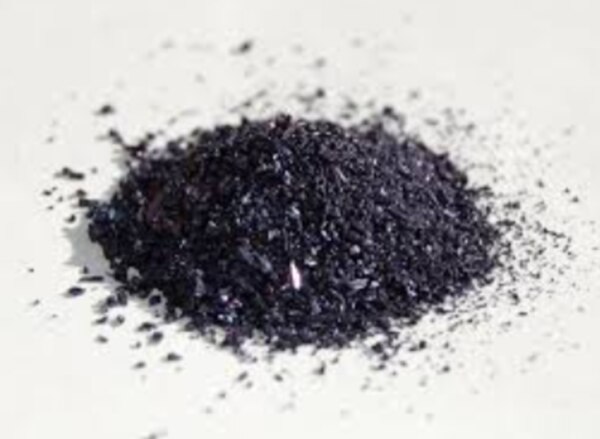
Potassium permanganate is an inorganic salt with the potassium permanganate formula KMnO₄. Commercial material arrives as dark purple crystals or free-flowing granules, sometimes appearing nearly black. It is a strong oxidizing agent, stains skin, clothing, concrete, and equipment, and produces a visible purple colour when excess remains in water.
1. Keep the solid dry in sealed, clean packaging with controlled dust. Moisture can cause caking and feeding problems, while airborne dust contaminates nearby surfaces and equipment. Do not sweep spills into drains; collect them with clean, dedicated tools.
2. Treat oxidizer storage hazards for potassium permanganate as a segregation issue. Store it away from combustible materials, reducing agents, concentrated acids, glycerol, oils, solvents, paper, wood, and other organic contamination.
3. Prevent contamination because a tiny contact point can react faster than the surrounding bulk. Oxidation at that point releases heat, and trapped dust or a contaminated spill can become hot enough to smoulder or ignite even while the main stock remains at ambient temperature.
4. Use dry-feed hoppers, augers, pumps, tanks, and stock-solution lines made from materials verified for permanganate service. Moisture-resistant construction and compatible wetted parts prevent corrosion, embrittlement, blockage, and unintended contact with incompatible residues. Keep preparation equipment dedicated and clean.
How KMnO₄ treats iron, manganese, sulfide, and selected contaminants in water
Potassium permanganate water treatment converts dissolved ferrous iron into particulate ferric hydroxide and dissolved manganese into manganese dioxide. Oxidation changes the contaminants; it does not remove them.
1. Rapidly mix the dose into the water, then provide a contact zone before clarification or filtration. Contact time, pH, temperature, and the water’s reducing demand control reaction completion; cold water or poor mixing leaves unoxidized iron, manganese, or sulfide.
2. Use it for hydrogen sulfide odour control and selected taste-and-odour compounds when testing confirms adequate demand and contact time. Permanganate can also perform arsenite oxidation to arsenate, but arsenate still needs adsorption, coagulation, or filtration for removal.
3. Design the next solids-removal step for the added load. Ferric hydroxide and manganese dioxide require coagulation, clarification, adsorption, filtration, or a combination; manganese dioxide can coat media, increase head loss, and shorten filter runs.
4. Set backwash frequency and flow for the actual manganese-dioxide accumulation, not the clean-water design alone. Inspect backwash water for colour and suspended solids, and define compliant disposal or treatment for backwash water and captured solids.
5. Treat pink or purple water as a dosing or process failure. A visible residual means demand has been exceeded or contact and filtration are inadequate; excess permanganate can stain equipment and increase manganese-dioxide loading. Process-water systems face the same separation requirement even when no drinking-water standard applies.
How to dose, monitor, and compare potassium permanganate with other oxidants
A fixed dose based only on iron or manganese will fail when sulfide, natural organic matter, or other reducing constituents consume permanganate first. Use a permanganate demand calculation from source-water testing, then confirm it with bench jars at plant pH, temperature, mixing time, and contact time.
- Influent: iron, manganese, sulfide, turbidity, colour, pH, temperature, oxidation-reduction potential, and organic demand.
- Treated water: dissolved and total iron, manganese, sulfide, turbidity, colour, pH, oxidation-reduction conditions, and residual permanganate.
Test several doses and measure residual colour after contact and filtration. A dry feeder suits crystals or granules; a prepared stock solution suits controlled metering, but both need calibrated pumps, compatible wetted materials, rapid contact-zone mixing, and downstream filtration. Control potassium permanganate dosing in mg/L from flow and demand, not from a fixed recipe.
Persistent pink permanganate breakthrough means demand, mixing, contact, or filtration control has failed.
| Oxidant or method | Strength and control | Main trade-off |
|---|---|---|
| Permanganate | Iron, manganese, sulfide oxidation; no chloride | Manganese dioxide solids, pink residual, oxidizer storage |
| Chlorine | Strong disinfection and residual | Chlorinated by-products and hazardous gas or hypochlorite |
| Chlorine dioxide | Strong oxidation and disinfection | Chlorite/chlorate control and skilled generation |
| Ozone | Very strong, rapid oxidation | No lasting residual; complex generation |
| Hydrogen peroxide | Flexible oxidation | Weak disinfection and precise control needs |
| Ferric salts | Coagulation and solids capture | Sludge, pH adjustment, not a disinfectant |
| Aeration | Low chemical hazard | Slow, equipment-heavy, limited for dissolved contaminants |
The chlorine ozone hydrogen peroxide comparison favours alternatives when high organic load makes demand costly. Permanganate is not normally the primary disinfectant for finished drinking water; uncontrolled demand, incompatible chemicals, or difficult residual control rules it out.
Industrial process uses beyond drinking-water treatment
Beyond drinking-water treatment, potassium permanganate chemical processing uses a strong oxidant where a defined reaction justifies its chemical demand and solids burden. Alkene, aldehyde, and alcohol oxidation can support synthesis, but poor selectivity causes overoxidation or cleavage, while manganese-dioxide sludge complicates product isolation and disposal.
1. Use permanganate for textile oxidation when controlled fading is the objective. Denim indigo fading depends on concentration, contact time, liquor movement, and prompt neutralisation; excessive exposure damages cotton fibres. Wash thoroughly to remove manganese-containing residues before drying or finishing.
2. Apply it to industrial wastewater as targeted pretreatment or polishing, not as a replacement for biological treatment. It can reduce sulfide and support industrial wastewater odour control, but high COD consumes permanganate rapidly. The resulting manganese solids then require coagulation, settling, filtration, or another separation step.
3. Consider permanganate in metal and surface processing for oxidation or cleaning steps only after testing the substrate and effluent. Residual oxidant can attack coatings, alter surface chemistry, and increase sludge.
The governing constraint is demand control: organic load, sulfide, metals, and other reducing compounds consume the dose before the target reaction is complete. Use jar tests or pilot trials to set concentration and contact time, then provide neutralisation, solids handling, and downstream biological treatment where biodegradable load remains.
What to specify when buying potassium permanganate for a real process
An accurate assay does not guarantee a successful delivery. Your potassium permanganate purchasing specification must tie the chemical to the process, feed equipment, storage conditions, and waste-handling plan.
- State the application, required grade, assay, and maximum limits for iron, chloride, heavy metals, insoluble matter, and other relevant impurities.
- Specify crystal or free-flowing granular form, package size, moisture barrier, pallet configuration, and whether bags or drums suit your handling system.
- Require a certificate of analysis and lot traceability, including the manufacturer’s lot number, production date, and test methods.
- For potable water, name NSF/ANSI/CAN 60 where the jurisdiction adopts it and request documentation for contaminant limits; assay alone is insufficient.
- Document the demand test or pilot basis for the dose, compatible equipment materials, and the potassium permanganate packaging and dry-feed system.
- Define storage temperature, humidity control, dust control, stock-solution preparation, feed calibration, and segregation from incompatible chemicals.
- Require a plan for manganese-dioxide solids, including filter loading, backwash water, sludge collection, and disposal.
| Supplier evidence | Prevents | Failure sign |
|---|---|---|
| Demand or pilot report | Underdosing and pink breakthrough | Dose based only on iron or manganese |
| Equipment guidance | Feed blockage, corrosion, or wetting | No material or moisture advice |
| Lot documents | Untraceable off-specification chemical | Brand name without batch records |
A Surat-based supplier such as Shiv Chemicals is useful only when it matches documentation, packaging, traceability, and application support to your process rather than merely naming a brand.
Related product
 | TEXTILE CHEMICALS any brand Soda ash is an odorless, white powder. It is stable, not toxic or explosive or flammable. ... View product → |
Frequently asked questions
What is potassium permanganate used for in water treatment?
Potassium permanganate oxidizes dissolved iron, manganese, sulfide, and selected organic contaminants so treatment systems can capture the resulting solids.
How do you monitor potassium permanganate dosing?
Track the feed rate, treated-water colour, oxidation conditions, filter performance, and residual permanganate to prevent underdosing or excess chemical.
How does potassium permanganate compare with other oxidants?
Compare it with chlorine, chlorine dioxide, ozone, and hydrogen peroxide by contaminant target, residual control, by-products, equipment needs, and operating cost.
What should you specify when buying potassium permanganate?
State the required grade, physical form, purity or concentration, packaging size, batch documentation, intended process, and delivery conditions.