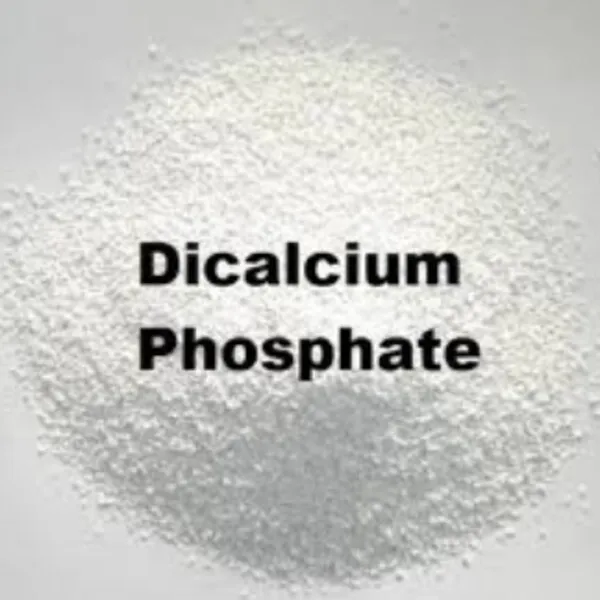
Dicalcium phosphate supplies calcium and phosphorus, but its value depends on chemical form, nutrient assay, species requirements, and the grade permitted for the final use. By the end, you will be able to compare its feed and food applications, calculate an inclusion rate, assess alternatives, and request documentation that supports a safe purchasing decision.
Key takeaways
- Account for available phosphorus, not total phosphorus, when setting feed inclusion.
- Match calcium and phosphorus supply to the animal’s species, age, and production stage.
- Compare DCP with MCP, defluorinated phosphate, limestone, and bone meal before purchasing.
- Request grade, assay, fluoride, heavy-metal, moisture, batch, and regulatory documents.
How dicalcium phosphate supports animal nutrition
Dicalcium phosphate supplies concentrated calcium and phosphorus to correct mineral gaps in formulated rations. As a calcium source, it supports bone development, muscle function, eggshell formation, milk production, and growth. Its phosphorus contribution matters only after accounting for available phosphorus, because total phosphorus includes forms animals cannot use efficiently.
- Poultry: It supports skeletal growth and eggshell strength. A balanced poultry feed calcium phosphorus supply is essential; too little calcium can produce thin shells, while excess can reduce nutrient efficiency.
- Livestock: It helps meet mineral needs in swine, dairy cattle, beef cattle, and other livestock, supporting bones, growth, and milk production.
- Aquaculture: It contributes calcium and phosphorus for skeletal development, though the ration must reflect the species, life stage, water conditions, and other mineral inputs.
- Pet food: It helps formulate complete diets for dogs, cats, and other companion animals, where an excessive calcium-to-phosphorus ratio can impair mineral balance during growth.
- Other animal feeds: It serves as a predictable mineral ingredient in diets for working animals, game birds, and selected specialty species.
These dicalcium phosphate uses in animal feed do not make it a replacement for a vitamin-mineral premix. Phytate in grains and oilseed meals can bind phosphorus, so phytase, ingredient digestibility, species, age, and processing affect the usable amount.
Use the product’s stated calcium, total phosphorus, and available-phosphorus values rather than dosing by weight alone. Anhydrous and dihydrate grades also differ in nutrient concentration.
How to calculate the right inclusion rate
Calculate dicalcium phosphate dosage in feed from the nutrient gaps, not from a fixed product weight. Subtract calcium and phosphorus supplied by the complete rest of the ration from the animal’s requirement, using the same units, such as kilograms per tonne of finished feed.
1. Determine the calcium gap. Divide it by the product’s calcium percentage expressed as a decimal. If the ration needs 2.0 kg more calcium per tonne and the DCP contains 23.3% calcium, the calculation is 2.0 ÷ 0.233 = 8.58 kg DCP per tonne.
2. Determine the total phosphorus gap separately. Use the product’s total phosphorus assay to calculate how much phosphorus the selected inclusion adds; do not treat total phosphorus as available phosphorus.
3. Complete the available phosphorus calculation with the supplier’s declared available-phosphorus value for the intended species. If the gap is 1.0 kg per tonne and the product provides 14% available phosphorus, 1.0 ÷ 0.14 = 7.14 kg per tonne.
4. Use the higher inclusion required by the calcium and available-phosphorus constraints, then check the resulting total phosphorus and calcium against their maximum or target levels. In the example, 8.58 kg per tonne meets calcium but adds about 1.20 kg available phosphorus, creating a possible excess.
Confirm whether the assay applies to dihydrate or anhydrous DCP, since their calcium percentage and phosphorus concentration differ. Recalculate when phytase, limestone, bone meal, or another phosphate changes the nutrients supplied by the rest of the ration.
When to choose DCP over other phosphate sources
Choose DCP when you need calcium and phosphorus together in a predictable ratio, without the acidity and rapid dissolution of a highly soluble phosphate. It suits dry poultry, swine, dairy, and livestock feeds when the formulation needs a concentrated mineral source rather than a fast-dissolving ingredient.
For dicalcium phosphate vs monocalcium phosphate, choose DCP for lower acidity, lower hygroscopicity, and a higher calcium contribution per unit of phosphorus. Choose monocalcium phosphate for liquid feeds, rapid dissolution, or formulations that demand higher soluble-phosphorus availability.
| Option | Choose DCP when | Choose the alternative when |
|---|---|---|
| Monocalcium phosphate | The ration is dry and needs calcium with phosphorus | You need rapid dissolution or high water solubility |
| Limestone and dicalcium phosphate | You need phosphorus as well as calcium in one controlled ingredient | The ration already meets phosphorus needs and only needs inexpensive calcium |
| Defluorinated phosphate | You require tighter control of phosphorus concentration and contaminant documentation | The supplier provides verified nutrient and fluorine results at a lower total cost |
| Bone meal | You need a consistent, traceable mineral specification | Animal-origin restrictions or variable ash and phosphorus content rule it out |
| Premix | The formulation needs only calcium and phosphorus, with vitamins and trace minerals adjusted separately | Several micronutrients must be corrected together |
Check the chemical form before comparing prices. Dihydrate and anhydrous DCP have different nutrient concentrations; “anhydrous dicalcium phosphate dihydrate” is internally contradictory and needs clarification. Never substitute any option weight for weight without recalculating calcium and available phosphorus.
How grade, contaminants, and documents affect procurement
A feed-grade dicalcium phosphate is purchased as a controlled calcium-and-phosphorus feed material, not simply as a purer version of a food ingredient. Confirm whether it is dicalcium phosphate dihydrate, CaHPO4·2H2O, or anhydrous CaHPO4; their calcium and phosphorus assays differ, so “18% phosphorus” alone is incomplete.
| Grade | What distinguishes it | What to verify |
|---|---|---|
| Feed-grade dicalcium phosphate | Approved for animal-feed use, with feed contaminant limits and declared nutrient availability | Species suitability, calcium, total phosphorus, solubility, and destination-market compliance |
| Food-grade dicalcium phosphate | Food additive material identified as INS 341(ii) or E341(ii), with permitted food uses and food-specific purity controls | Authorized food category, additive specification, particle size, and microbial limits |
| Pharmaceutical or nutraceutical grade | Controlled as an excipient or nutrient ingredient under a separate monograph or customer specification | Do not treat a feed certificate as evidence of suitability |
Request a lot-specific certificate of analysis containing:
- Total calcium, total phosphorus, moisture or loss on drying, particle-size distribution, bulk density, and the stated water- or citrate-solubility test
- Separate results for fluorine cadmium arsenic lead mercury, compared with the legal maximums in your destination market; EU feed buyers should check Directive 2002/32/EC
- Lot number, manufacture date, retest or expiry date, chemical form, assay method, and traceability statement
- Product specification, safety data sheet, intended-grade declaration, and a signed compliance statement
Shiv Chemicals can help a buyer avoid a costly substitution error by confirming whether the quoted material is DCP rather than tricalcium phosphate or monocalcium phosphate and by matching documents to the intended use.
Related product
 | OTHERS Di Calcium phosphate is the calcium phosphate with the formula CaHPO and its dihydrate. View product → |
Food, supplement, and nutritional formulation uses
Dicalcium phosphate food applications use the additive as INS 341(ii), or E341(ii) under the European system. Its permitted function depends on the food category and market authorization:
- Raising-agent component
- Acidity regulator
- Stabilizer or free-flow aid
- Calcium and phosphorus nutrient
Check the destination country’s additive standard and maximum use level; acceptance in one market does not authorize the same grade or concentration elsewhere.
Dry nutrition products use dicalcium phosphate because it supplies both minerals in a stable, low-moisture form. Common formats include:
- Fortified powdered drinks
- Meal replacements
- Calcium phosphate supplements
- Nutraceutical tablets and capsules
Its limited water solubility creates a practical limit. In clear beverages or liquid formulas, it can settle, feel gritty, or remain partly undissolved, so a more soluble calcium salt may produce a smoother product.
Pharmaceutical and nutraceutical manufacturers also use suitable calcium phosphate material as an excipient or diluent. Do not substitute feed-grade DCP: food, pharmaceutical, and feed grades can differ in impurity limits, particle-size distribution, microbial specifications, traceability, and certificates.
Ask for the exact specification, intended-use statement, certificate of analysis, and permitted-use basis for your market. Confirm calcium and phosphorus assay, moisture, heavy metals, fluoride where relevant, microbial results, and particle size before approving the material for a finished formulation.
Frequently asked questions
How does dicalcium phosphate support animal nutrition?
Dicalcium phosphate supplies calcium and phosphorus for bone development, muscle function, eggshell formation, milk production, and growth. Calculate phosphorus using its available fraction rather than total phosphorus alone.
How do you calculate the right dicalcium phosphate inclusion rate?
First identify the ration’s calcium and available-phosphorus deficits. Then divide each deficit by the corresponding calcium or available-phosphorus contribution from the selected DCP grade, and check that the resulting rate does not oversupply either mineral.
When should you choose dicalcium phosphate over other phosphate sources?
Choose DCP when you need a combined calcium-and-phosphorus source with a defined mineral contribution. Compare it with MCP, defluorinated phosphate, limestone, and bone meal for phosphorus availability, calcium content, contaminants, handling, and formulation cost.
Which documents and quality details matter when buying dicalcium phosphate?
Request the product specification, certificate of analysis, batch number, assay for calcium and phosphorus, moisture, fluoride, heavy metals, particle size, country of origin, and documents showing the grade is suitable for the intended feed, food, or supplement use.